Hair Transplant Techniques

FUT Hair Transplant or FUE Hair Transplant?

Thick and natural-looking hair is the end goal for you and every hair transplant surgeon, especially for Dr. Armani. There are a variety of hair transplant procedures to help you achieve the natural look and feel; each type has its pros-and, unfortunately, cons.

The two main techniques used in the field are Follicular Unit Transplantation (FUT) & Follicular Unit Extraction (FUE), and the main difference is how the follicle is extracted. Read on to learn more about FUT & FUE and to help determine if either procedure is right for you.

FUT

One of the main advantages of FUT vs. FUE is that follicular units in FUT are harvested from a higher-density donor zone. Also, since the grafts are visible from the harvested donor strip during the graft removal process during an FUT vs. during FUE graft harvesting, the grafts are “blindly” punched out from the donor area by following the direction of hair growth. Higher quality grafts mean that FUT grafts may be slightly healthier and grow better than some grafts when compared to harvested grafts using an FUE process.

An FUT procedure can harvest a higher number of grafts per procedure and in a lifetime than an FUE procedure.

No need to shave the donor area.

With FUT, you don’t usually worry about additional scarring in future hair transplants. The first scar is normally removed in the next procedure, unlike FUE, where the number of grafts removed will result in an equal number of tiny round scars. This increases the second time around and every time after.

FUE

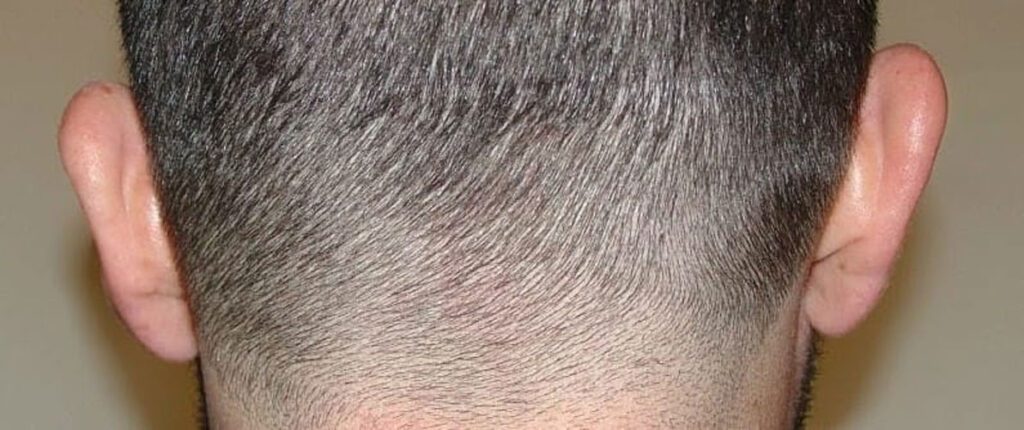
With FUE, hair is extracted without a horizontal incision, meaning no linear incision is made on the back of the head. No incision means less scarring for those patients who have a greater risk of donor scarring, such as younger/muscular, athletic patients, or patients who scar poorly or have a history of keloid.

  • Relative discomfort following surgery can potentially be decreased.
  • Hairstyle can be worn at almost any length, usually without scarring.
  • Quicker medical recovery time, related to returning to an exercise routine, since there is no suture to be removed, allowing a return to lifestyle relatively quickly.

FUE procedure takes a bit longer and therefore subjects the patient to more local anesthesia. This also contributes to FUEs costing slightly more than FUTs.

In both procedure types, patients may experience swelling of the forehead, which can last several days following the procedure. For some patients, a combination of FUE and FUT procedures may work best!

FUT vs FUE Comparison Chart

 FUTFUE
Donor Area & ScarringWill leave a narrow linear scar on the back of the head.micro-scars that look like little dots and usually not visible to the naked eye.
Survival Rate of GraftsExtracted grafts are more robust and may survive better.Extracted grafts may be thinner with a slightly lower survival rate.
Number of Grafts & DensityUp to 4,000 grafts harvested in one session.Up to 2,000 grafts harvested in one session.
HealingSlower recovery
Swelling in transplantation area
No need to shave the donor area
Requires suture removal.
Faster recovery
Swelling in transplantation area
Requires the donor area to be shaved
No suture removal.
Cost FUE is usually a bit more expensive than FUT.


* Results may vary

If you have any questions or are thinking about a hair transplant procedure, contact Armani Medical today! There is no such thing as too many questions and we want you to come into your next consultation or procedure armed with as much knowledge as possible about hair transplantation in the Dallas/DFW metroplex.

Artistically Redesigned Transplant Surgery®

At Armani Medical, Dr. Abraham Armani uses his innovative, unique, and trademarked method of Artistically Redesigned Transplant Surgery®, known as the A.R.T.S.® In this method, the hairline can be re-designed while considering the patient’s unique facial features to create a final result which is superior and more appropriate than the original hairline prior to hair loss.

Hair Restoration and Hair Transplant Techniques

While a variety of hair transplant techniques exist, the two scientifically advanced methods of hair transplantation are known as Follicular Unit Transplantation (FUT) and Follicular Unit Extraction (FUE), which include the use of automated machines such as Neograft® and Artas. At Armani Medical, we have access to several different FUE machines with various levels of automation and potential benefits.

Which Hair Transplantation Procedure should you choose?

Determining which hair transplant technique is right for you will be a matter of personal choice and medical decision making based on many factors such as previous procedures, potential need for possible future transplants procedure length and cost, as well has a. At the time of your consultation Dr. Armani will discuss all the Pros and Cons of each procedure type with you to help make the best decision for the best ultimate result. Unlike most other clinics who only offer one type of hair transplantation technique for all patients we carefully consider all available options and help choose the right Hair Restoration technique for each individual patient.

Other Options

Other forms of breakthrough interventions including use of PRP (platelet Rich Plasma) in conjunction with hair transplantation procedures are also available within our clinic in order to insure the highest degree of hair restoration success. Dr. Armani’s facility was the first to use PRP for hair restoration and hair transplantation in Dallas, Texas.

What to Know About FUT Post-Op


POST-OP


TRANSPLANTED AREA


DONOR AREA


Day 1 After SurgeryPatients are instructed to rest indoors and continue wearing their head bandage.Possible soreness, tightness or numbness possible but most patients report no pain at this point.
Days 2Head bandage is removed. Short transplanted hairs, dried blood and redness are visible. Patients may rinse hair according to instructions.Soreness in the donor area begins to disappear. Some numbness may continue. Start applying anti-biotic ointment to the suture line.
Days 3-6Scabbing/crusting becomes visible. Possible swelling may move across the nose and around the eyes.Continue applying anti-biotic ointment to the suture line.
Day 7Swelling usually has subsided. Redness has mostly resolved.Most numbness will normally resolve. Continue applying anti-biotic ointment to the suture line.
Day 10The grafts are permanently adhered in place within the scalp. Remaining scabs can be gently washed off. Patients may return to normal shampooing, brushing and combing.Patient may stop applying Antibiotic ointment to the suture area.
Days 11-14The transplanted hairs will begin to temporarily fall out.Sutures will be removed.
Week 3The transplanted hairs will continue to fall out. Patient may get a haircut.Scar will continue to heal and strengthen.
End of Month 1Most Transplanted hair shafts have fallen out and the patient will look similar to their before photos. Patients may dye their hair if they wish.Patient may start strenuous activity/weight lifting.
3 monthsAbout 30% of the transplanted hairs are growing.Any residual numbness in the donor area has generally resolved.
6 monthsAbout 60% of transplanted hairs are growing.The donor area regains most of its strength.
12-15 monthsThe final result of the hair transplant can be seen and patients are scheduled for a follow-up. If necessary, a second FUT session can be considered at this point.

The donor area regains most of its laxity.

The Neograft® Procedure

Hair transplant procedures produce near-permanent results. Therefore, it is essential to research not only the technology but also to search for an experienced expert hair restoration surgeon who offers various surgical techniques. Neograft® technology, while it is a lauded follicular unit harvesting and implantation system, is only as good as the skill of the doctors/technicians who use it.

For men of all ages, deciding to undergo hair transplant surgery is a highly positive, life-changing experience. As many as a quarter of all men 21 years of age and younger experience male pattern baldness, or androgenic alopecia. That number increases to two-thirds by age 35 and 85 percent by age 50.

While styling for some can camouflage the physical effects of male pattern baldness, what is also often hidden from view is the psychological distress that many men begin to feel. For some men, hair loss causes anxiety and depression. To get back on to track leading to a healthier and happier future, many men courageously decide that a hair transplant procedure is the best option.

Dr. Abraham Armani is a surgeon and a nationally recognized and award-winning expert in the field of hair restoration. For six years running, he has been awarded the “The Patients’ Choice Award.” He is also conveniently located in Dallas, Texas. Meet with him to see if hair transplant surgery or another method of hair restoration is right for you by calling his office at (972) 2- ARMANI.

The NeoGraft® Automated FUE

The NeoGraft® is the first FDA-approved automated surgical follicular unit extraction (FUE) and injection system machine. The machine, through hand-held pneumatic controls, enables a skilled and experienced hair transplant surgeon to more precisely extract individual healthy long-lasting hair follicles and transplant them into a predetermined site. Automated FUE is a comparatively more successful, yet more expensive, technique that can yield considerable benefits:

Benefits

  • Because each hair follicle graft is smoothly extracted with controlled pneumatic pressure, damage to follicles is decreased compared to manual methods.
  • Shorter recovery period, compared to most other methods. Minimal care is necessary immediately following the procedure.
  • No linear scarring like strip harvesting, which entails taking a piece of scalp containing healthy hair.
  • No stitches, minimal if any scarring in follicle donor or recipient sites.
  • Can return to work within days and may participate in strenuous physical activity 10 days after the procedure.
  • Awake during this virtually painless procedure. Between harvesting the follicles and transplanting them, a break is possible.
  • New natural and permanent hair growth occurs three to four months after the procedure.


Basic Steps in NeoGraft® Automated FUE

Design

If you decide with your hair transplant surgeon that the NeoGraft® Automated FUE procedure is right for you, with your detailed aesthetic goals, your surgeon will design a procedural plan of where to harvest and then transplant your hair to attain your desired results.

The Procedure

Procedures usually start in the morning and end in the afternoon, generally lasting three to six hours, and are split into two phases: harvesting and then placement. To ensure comfort and hemostasis during the procedure, local anesthetics will be injected into the scalp.

During the harvesting phase, you will be placed face down to allow the team easier access to your scalp’s donor area, usually located in the back of the head. Before the placement phase, you will have an opportunity for a break that can include trips to the bathroom as well as a small meal/ snacks. You will be comfortably seated during the placement phase to allow your surgeon ease of access to the recipient site.

Once the procedure is complete, your surgeon will have your scalp sprayed clean, a special solution (Hypothermosol) will be applied, and a dressing bandage will be applied and covered by a surgeon’s medical hat. Your surgeon will give you specific instructions, and possibly medication and/or a cool laser device to assist in caring for your scalp, and improve the healing and hair regrowth processes. Additional medication to assist in managing pain will also be advised or prescribed.


POST-OP


TRANSPLANTED AREA


DONOR AREA


Day 1 After Surgery

Patients are instructed to rest indoors and continue wearing their head bandage. Anti-swelling medication will be taken.

Possible soreness, tightness, or numbness is possible, but most patients report no pain at this point.

Days 2

The bandage is removed. Short transplanted hairs, dried blood/scabs, and redness are visible. Patients may rinse their hair according to instructions.

Any soreness in the donor area begins to disappear. Some numbness may continue. Start applying antibiotic ointment to the suture line/donor area.

Days 3-6

Scabbing/crusting becomes more visible. Possible swelling may move across the nose and around the eyes.

Continue applying the antibiotic ointment to the donor area.

Day 7

Swelling usually has subsided. Redness has mostly resolved.

Most numbness will normally resolve. Continue applying antibiotic ointment to the donor area.

Day 10

The grafts are permanently adhered in place within the scalp. Remaining scabs can be gently washed off. Patients may return to normal shampooing, brushing, and combing.

Patients may stop applying the Antibiotic ointment to the suture area.

Days 11-14

Most of the transplanted hairs will begin to fall out temporarily.

Sutures will be removed (for an FUT procedure)

Week 3

The patient may get a haircut. The transplanted hairs will continue to fall out. 

The donor will continue to heal.

End of Month 1

Most transplanted grafts have fallen out, and the patient will look similar to the before photos. Patients may dye their hair if they wish.

Patients may start strenuous activity/weight lifting.

3 months

About 10% of the transplanted hairs are growing.

Any residual numbness in the donor area has generally resolved.

6 months

About 40% of transplanted hairs are growing.

The donor area regains most of its strength.

18 months

The final result of the hair transplant can be seen for most patients who had transplantation in the hair line or top of the scalp (for crown transplants, the final result will take up to 24 months). If necessary, a second hair transplant session can be considered.

The donor area regains most of its laxity.

Results

You may notice some drainage in the first day or two, but you can expect to return to work within a few days. At the same time you will notice that at the points of the FUE harvest and placement may have some very small scabbing, which should disappear in a few more days.

You should avoid directly touching the FUE points with you hands or objects such as a comb. Also avoid strenuous activities such as cardio exercises, weightlifting, or other activities that would put you under strain for at least 10 days, but seek clarification from your surgeon.

After three or four months you should start to notice new hair growth. The time it will take to reach the fullness you desire will depend a lot on how fast you hair normally grows and the length you desire it to be. It is permanent, and therefore you will be able to style it in the way you choose.

Is NeoGraft® for You?

NeoGraft® is a mechanical tool. Achieving the results you desire using the NeoGraft® Automated FUE procedure is almost entirely up to the skill and, yes, artistry of your surgeon.

The NeoGraft® Automated FUE procedure requires a surgeon to physically handle the pneumatic tools during the harvesting and placement phases, which increases the chances that some follicles may become damaged due to human error. Because the follicles are inserted into the donor site using pneumatic air pressure, it is challenging to ensure the follicles are positioned in the manner desired.

Further damage to the follicles may occur because the protective coating surrounding follicles may be stripped during the harvesting, exposing them to the danger of being over-dried. Further over-drying may occur because air suction and propellant are the means by which the hair is harvested and then placed.

AWARDS


Top 10 Plastic surgeon (2015, 2016, 2017, 2018) America’s Most Honored Professionals (2015, 2016, 2017, 2018) Patients’ Choice Award (2010, 2011, 2012, 2013, 2014, 2015, 2016, 2017, 2018) Top 10 Doctor – Dallas/Fort Worth Plastic surgeon (2014, 2015, 2016, 2017, 2018) Top 10 Doctor – Texas Plastic Surgeon (2014, 2015, 2016, 2017, 2018) Albert Nelson Marquis Lifetime Achievement Award (2017, 2018) Top Doctor Dallas – International Association of Healthcare Professionals (2018) On-Time Doctor Award Compassionate Doctor Recognition

MEMBERSHIPS


Diplomate of the American Board of Hair Restoration Surgery American Association of Cosmetic Surgery International Society of Hair Restoration Surgery European Society of Hair Restoration Surgery Brazilian Association of Hair Restoration Surgery American Academy of Hair Restoration Surgery Association of American Physicians and Surgeons American Academy of Anti-Aging Medicine

Enjoy Your Own Hair Again

Enjoy renewed confidence with life-changing, perfect results you will be proud of.

There are many options for hair restoration. But few compare to the expert artistry that Dr. Armani’s practice offers. His approach is for the discerning patient. Get in touch to learn more. 

request A consultation

Start Your Hair Transformation Today

Loved By Patients